
Digital Marketing and Social Media Marketing aren’t just a trend.
They’re skills.
Ones of the most valuable you can build today.
This post contains affiliate links, which means I may earn a small commission if you click through and make a purchase, at no additional cost to you. I only recommend products and resources I genuinely believe can add value. Thank you for supporting my work! (Read my disclosure policy)
In this article, we’ll explore three key areas:
- What digital marketing really is
And why it’s a game-changer for your career or business. - Social media marketing
We’ll look at the most powerful platforms (Meta, Pinterest, YouTube, and LinkedIn) and show you where to start, how they work, and why they matter. - The best content calendar templates
Simple. Affordable. Effective.
These tools will help you organize your content across all channels and give you a clear, professional overview of your strategy: I use them every single day.
Think of digital marketing as a way to build visibility, trust, and results without being pushy or wasting time. Whether you’re launching a product, building a personal brand, or just trying to grow online, the tools and ideas in this post will help you start with confidence.
I’m Michele.
I have a degree in Management Engineering.
I’ve worked and studied in Italy, Japan, and Germany, collaborating with global consulting firms, leading multinational companies, and fast-growing startups.
Now, I write this blog.
Why?
Because writing is one of my greatest passions.
And because I believe that sharing what I learn can help others take their first step (or their next big leap) in the world of digital business.
Ready to dive in?
Let’s start with the basics.
What is digital marketing and why should you care?
Digital Marketing
Digital marketing is the art and science of promoting products or services using online channels. It’s not just about being present on the internet, it’s about using specific tools and strategies to connect with the right audience at the right time, and turning that connection into action.
At its core, digital marketing combines several key elements:
- SEO (Search Engine Optimization) helps your website rank higher on Google so people can actually find you when they search.
- Email marketing lets you build a direct, personal line with your audience: offering updates, exclusive offers, or valuable content straight to their inbox.
- Paid advertising, such as Google Ads or Facebook Ads, gives your content a major visibility boost and can drive traffic instantly, perfect for campaigns with clear goals or time-sensitive offers.
- Social media marketing focuses on platforms like Instagram, Facebook, YouTube, Pinterest, and LinkedIn. It’s where your brand becomes human, interacts with people, shares ideas, and builds loyalty over time.
The biggest advantage of digital marketing is that it’s measurable, scalable, and targeted.
You can reach massive audiences, but you can also get incredibly specific, targeting people by age, location, interests, job titles, or behaviors.
That means you don’t waste time or money shouting into the void.
Everything can (and must) be tracked: clicks, conversions, views, ROI, and more.
It’s a smarter way to grow, whether you’re a freelancer, startup founder, or part of a global team.
When I was first getting started, one book helped me make sense of it all:
“Becoming A Digital Marketer” by Gild Gildner and Anya Gildner
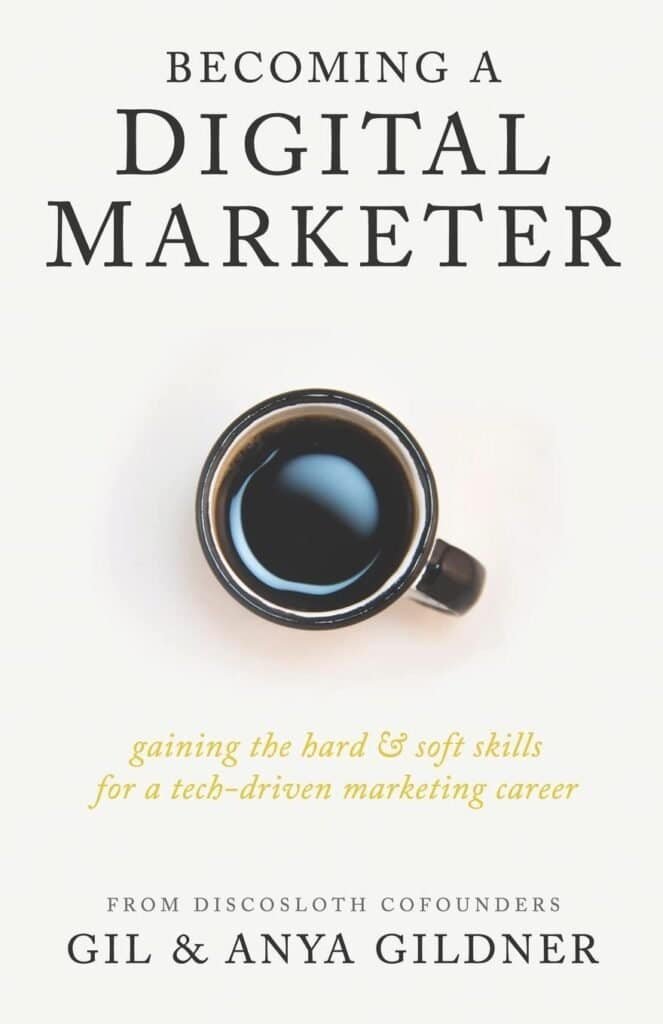
It brokes down complex ideas into practical steps, and gave me a solid foundation to build real-world digital strategies, many of which I still use today.
Social Media Marketing: Platforms, Formats & Strategies That Work in 2025
Social media marketing is one of the most powerful branches of digital marketing.
It’s where you build visibility, trust, and community while driving traffic, engagement, and conversions.
But not all platforms are the same.
Each has its own audience, language, and best-performing formats.
At the end of this section, you’ll find a video I came across during my research.
It’s a fully updated breakdown (2025 edition) of the pros and cons of each platform for social media marketing. Highly recommended if you want to go even deeper!
Before we dive in, if you’re into digital marketing, you might enjoy another article I recently wrote.
It’s all about side hustles (yes, even for beginners) that you can easily combine with your new skills.
Because let’s be honest:
Digital marketing + working from home as a freelancer = the dream life.
You can read it HERE.
Let’s break down the ones you should focus on in 2025:
Meta (Facebook + Instagram)
These two platforms still dominate in terms of active users and ad capabilities. And while they’ve evolved, they’re far from dead.
- Instagram is all about short-form, visual-first content.
- Best formats: Reels, carousel posts, and Stories.
- Reels continue to dominate in reach and discoverability.
- Carousels (especially educational or storytelling ones) boost saves and engagement.
- Stories are perfect for behind-the-scenes, limited-time offers, and polling your audience.
- Facebook thrives with groups and targeted ads.
- Best formats: short videos, native posts, and live streams.
- It’s ideal for community-building and more personal B2C relationships.
- Facebook Ads remain one of the most powerful tools for hyper-targeted marketing thanks to Meta’s unmatched data.
Tip: Use Instagram to attract and engage. Use Facebook to convert and retarget.
Pinterest is a visual search engine, not just a social network.
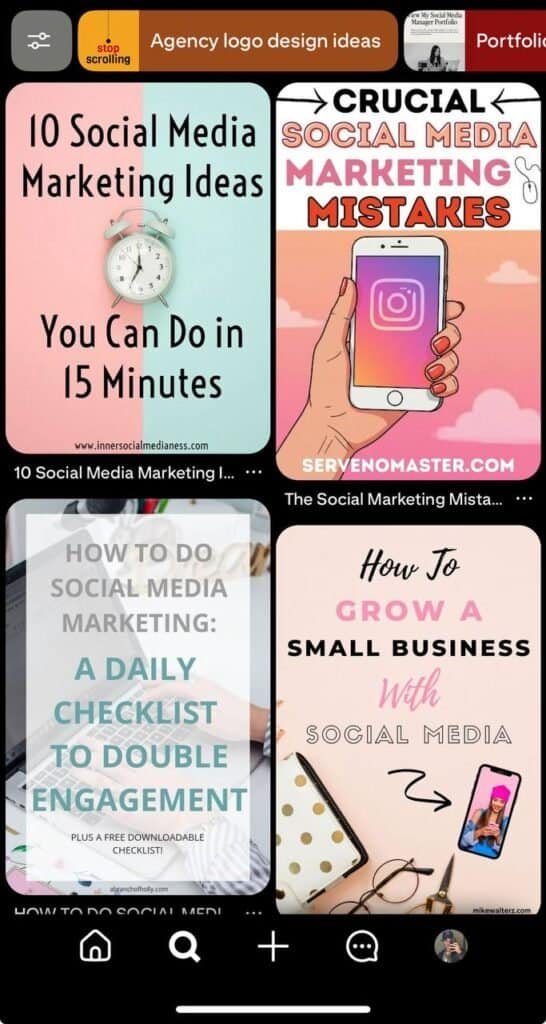
It’s perfect for niches like fashion, travel, fitness, home decor, and digital products.
But it’s also growing fast in B2B, education, and coaching spaces.
- Best formats: Idea Pins, static pins with SEO-rich titles, and Pinterest video pins.
- Pinterest content lives longer than any other platform—often driving traffic months (or years) later.
- Great for blog posts, product discovery, and evergreen lead magnets.
Strong point: Pinterest is intent-driven. People come to search, plan, and take action—making it perfect for lead generation and sales funnels.
YouTube
YouTube is where long-form content still rules, and video is the king of all formats.
It’s ideal for building deep authority, educating, and storytelling.
- Best formats: long-form tutorials, product reviews, behind-the-scenes, and YouTube Shorts.
- In 2025, YouTube Shorts are exploding in reach. They’re great for top-of-funnel discovery.
- But long-form still drives watch time, SEO, and loyalty.
YouTube content also ranks on Google search, making it one of the best platforms for long-term discoverability.
Strong point: If you want to own your niche and build lasting trust, YouTube is a must.
LinkedIn has evolved from a digital CV platform into a powerful hub for personal branding, B2B marketing, and thought leadership.
- Best formats: text-only posts with storytelling, carousels, native videos, and polls.
- It’s not about over-designed content, it’s about authentic, value-driven communication.
- LinkedIn’s organic reach is still significantly better than Facebook for B2B and professional content.
In 2025, personal brands outperform company pages.
People want to follow people, not logos.
Strong point: LinkedIn is perfect for networking, collaborations, and building authority in your industry.
Content Calendar Templates
1. palmandgracedesigns
Price: $9.00
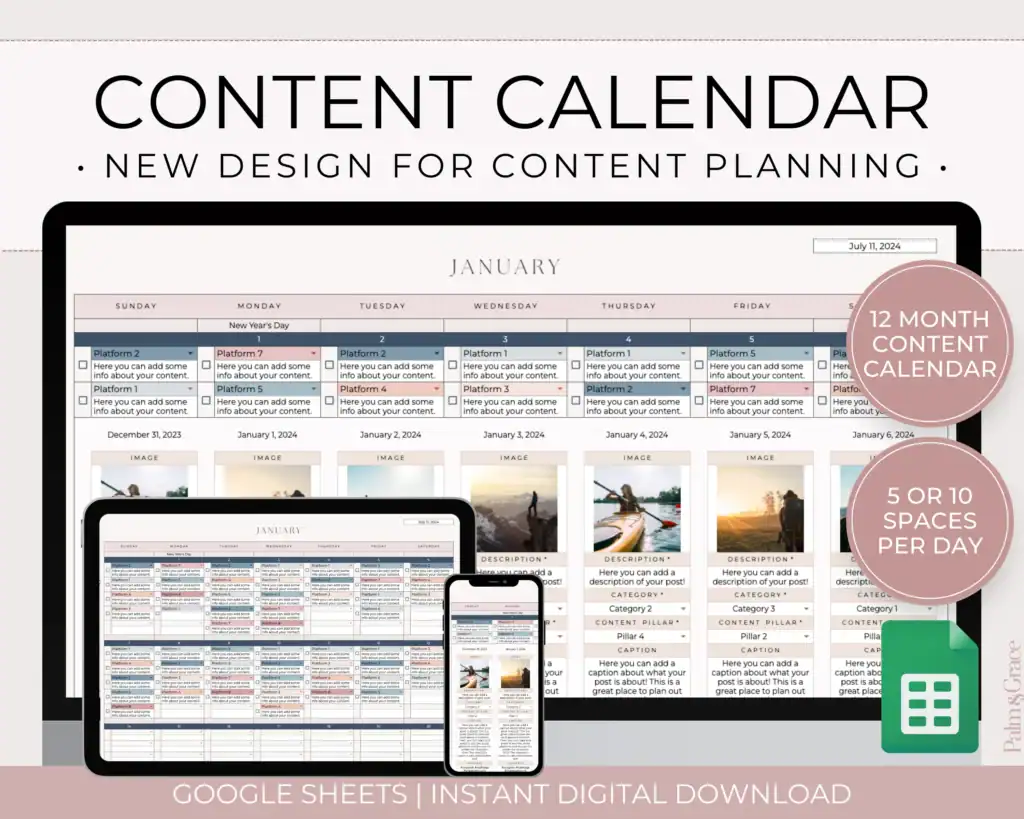
One of the tools I’ve recently started using (and now can’t do without) is this Google Sheets content calendar template.
It’s super practical if you manage content across different platforms and want to keep everything in one place without paying for expensive software.
What I like most is how flexible and well-structured it is.
You can set your week to start on Sunday or Monday, and it supports up to 8 platforms, so whether you’re posting on Instagram, LinkedIn, Pinterest, or all of them, it adapts.
There are also tabs where you can organize content ideas and even group your hashtags, which honestly saves a lot of time.
Each month has its own tab with collapsible sections that help you map out your content clearly.
You can check off posts once they’re scheduled or published, add notes for things like launches or holidays, and reuse the calendar year after year.
It’s designed in Google Sheets, so you can access it from anywhere (desktop, tablet, or mobile), and it’s especially smooth to use on desktop.
If you’re looking for a clean, reliable, and budget-friendly way to manage your content, this template is definitely worth checking out. I’ve linked it in the title and in the pic.
2. Templates Studio PlanIt
Price: $2.82
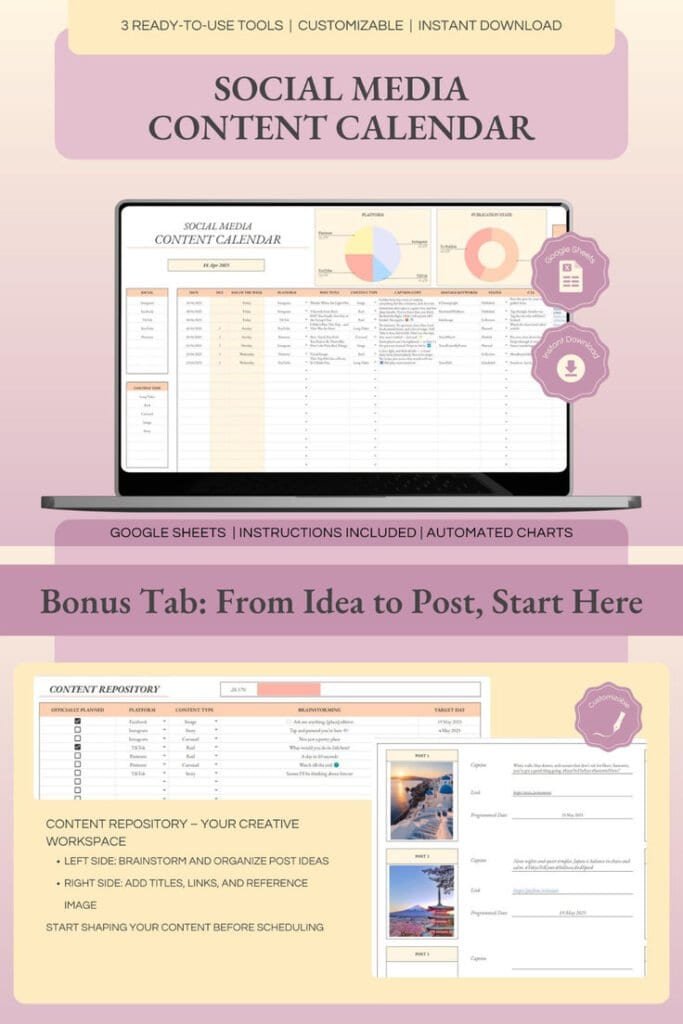
If you’re managing content across multiple platforms, this Google Sheets content calendar template can make your life a lot easier.
It’s made for creators, small business owners, freelancers, marketers and new social media managers.
You don’t need fancy tools. Just open it in Google Sheets and start planning.
You can map out your content weekly, monthly, or even yearly.
There’s a clean layout where you choose your platform, content type, and post status from dropdowns.
It also uses color codes to keep things clear at a glance: drafts, scheduled posts, and published content are all easy to track.
There’s a space to collect ideas, write captions, and store useful links.
It’s great if you like to batch content or work ahead.
I like how everything stays in one place. No switching between tools or getting lost in folders.
And it works on any device, though desktop is best.
You’ll also find a quick guide inside the file.
It helps you get started fast, even if you’ve never used a planner like this before.
If you’re creating content for Instagram, TikTok, Pinterest, LinkedIn, or YouTube, this tool for social media marketing can help you stay consistent and save time.
I’ve added the link in the title and in the pic if you want to check it out.
Final Thoughts
We’ve gone through the basics of digital marketing, the most effective social platforms in 2025, and two great tools to help you stay organized and consistent.
If you’re reading this, you’re already investing in yourself, and that’s what really counts.
I hope this guide gave you practical ideas and a fresh perspective.
If it helped you, feel free to share it using the social buttons at the top or bottom of the page, it’s a great way to support my work.
You can also follow me on Pinterest to stay updated with new tools, tips, and strategies I post regularly.
Good luck with your digital journey
you’ve got this.
A hug,
Michele